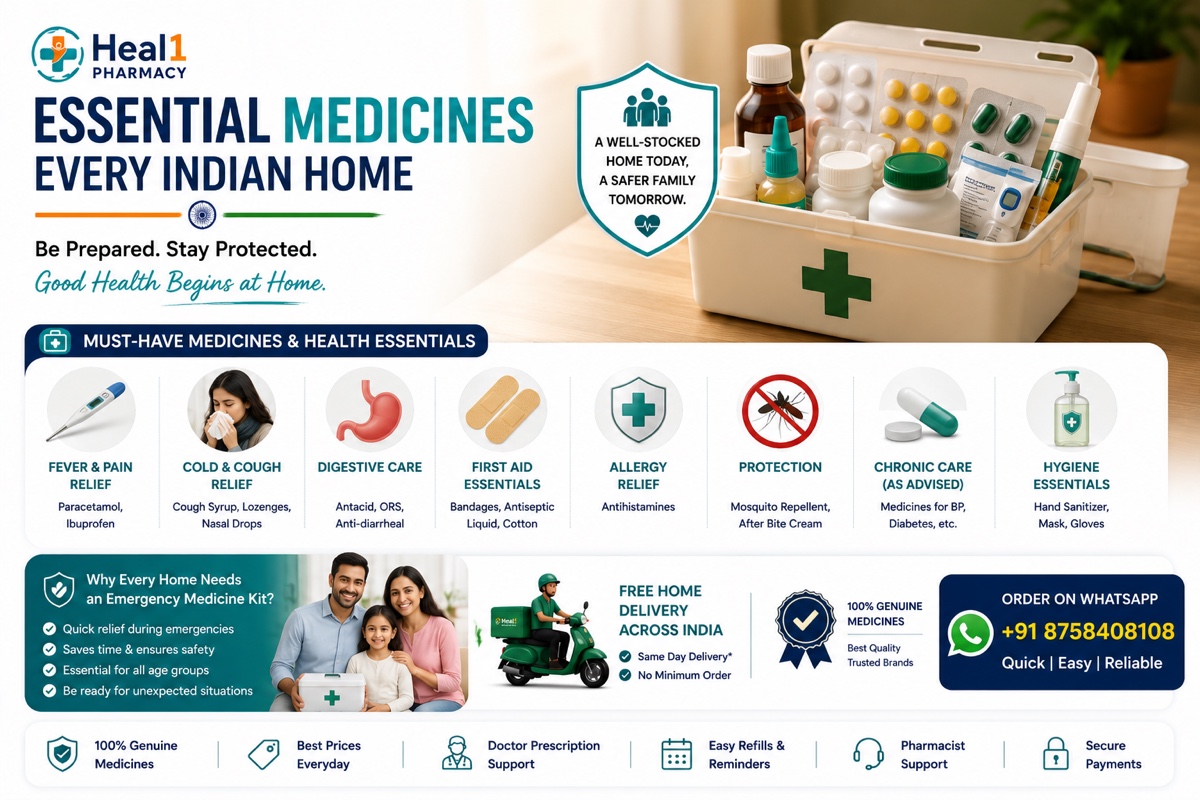
Health emergencies rarely arrive at a convenient hour. A toddler spikes a fever at 2 a.m., a family member slips in the kitchen, or a sudden bout of food poisoning strikes after a wedding feast — and the nearest chemist may already be shut for the night. This is exactly why a thoughtfully stocked home medicine kit is one of the simplest, smartest investments an Indian family can make.
In this complete guide, we walk you through the essential medicines every home should keep, how to store them safely, how to stay ready for emergencies, and — just as importantly — when to stop self-treating and call a doctor. Whether you live in a 1BHK in Bopal or a bungalow in Satellite, this checklist will help you protect the people who matter most.
⚠️ Important disclaimer: This article is for general information only and is not a substitute for professional medical advice. Medicines — even common over-the-counter ones — should always be taken according to the guidance of a qualified doctor or registered pharmacist. Read every leaflet, follow the correct dose, and seek medical help for symptoms that are severe, unusual, or last more than 2–3 days, and for young children, pregnant women, the elderly, or anyone with a chronic illness.
What Should Be in a Home Medicine Kit?
A complete home medicine kit should include a fever and pain reliever (paracetamol), an antihistamine for cold and allergy, ORS sachets for dehydration, an antacid for acidity, antiseptic liquid and antibiotic cream for wounds, assorted bandages, and a digital thermometer — plus the regular prescribed medicines of anyone in the family with a chronic condition. Below, we explain each category and how to use it safely.
1. Why Every Home Should Have a Medicine Kit
A well-organised medicine cabinet does far more than save you a late-night trip to the pharmacy. It buys you precious time when minutes matter, stops small problems from snowballing into big ones, and brings calm to a stressful moment. When you can reach for the right item immediately, a fever, an upset stomach or a minor cut becomes manageable rather than frightening.
Keeping emergency medicines at home is especially valuable in Indian households, which often span three generations under one roof — toddlers, working adults and grandparents, each with different needs. The goal is not to turn your home into a clinic, but to maintain a sensible set of medicines for family health that covers everyday illnesses and genuine emergencies until professional care is available. A good kit typically pays for itself the very first time you need it.
Think of your home medicine kit in three layers: everyday relief (fever, cold, acidity), first aid and wound care (cuts, burns, bites), and condition-specific essentials (the regular prescribed medicines of anyone with diabetes, blood pressure or heart conditions). Build all three and you will be ready for the vast majority of situations a family faces.
Why Every Family in Ahmedabad Should Maintain a Home Medicine Kit
Families across Bopal, South Bopal, Ambli, Iscon, Shela, Ghuma, Shilaj, Science City and Satellite face a few very local realities that make a ready home medicine kit especially valuable. These fast-growing residential pockets of west Ahmedabad have many young families, working couples and senior citizens — but late at night or during heavy monsoon, reaching an open chemist can mean a long, avoidable trip.
Ahmedabad's climate adds its own demands. The intense Gujarat summer raises the risk of heat exhaustion and dehydration, making ORS a must-have, while the humid monsoon brings a spike in fever, cold, viral infections and stomach upsets across Bopal and Shela. Keeping the right medicines at home means you can respond in the first few minutes instead of stepping out in the rain with a sick child.
As a trusted neighbourhood pharmacy in South Bopal, Heal1 Pharmacy already serves these areas every day — and we offer free home delivery in Bopal, South Bopal, Ambli, Iscon, Shela, Ghuma, Shilaj, Science City and Satellite. That means you can stock and refill your family's home medicine kit without leaving the house, and reach a real pharmacist on WhatsApp whenever you have a question. Learn why we're the most trusted medical store near Bopal.
2. Fever and Pain Relief Medicines
Fever, headaches and body aches are the most common reasons families reach into the medicine box, so this is the foundation of any kit.
- Paracetamol 500/650 mg (Crocin, Dolo, Calpol) — the first-line choice for fever and mild-to-moderate pain. It is safe for most people when taken correctly. A typical adult dose is one tablet every 6 hours, not exceeding 4 in a day.
- Ibuprofen 400 mg (Brufen, Combiflam) — helpful for body aches, dental pain, period pain and inflammation. Always take it after food, and avoid it if you have acidity, ulcers or kidney problems unless your doctor approves.
- Pain-relief gel or spray (Volini, Moov) — for muscle pulls, sprains, and neck or back stiffness.
- Paediatric paracetamol syrup for children, dosed strictly by weight as advised by your paediatrician — never an adult tablet broken into pieces.
Keep a simple thermometer alongside these so you can measure fever accurately rather than guessing by touch.
3. Cold and Cough Medicines
Seasonal changes, Ahmedabad's dust, and air-conditioning make coughs, colds and allergies a year-round visitor. Stock a small selection so you can match the medicine to the symptom. For gentle, drug-free relief alongside these medicines, see our guide to home remedies for cold, cough and fever.
- Antihistamines — Cetirizine 10 mg or Levocetirizine 5 mg for sneezing, runny nose, itching, hives and allergies.
- Cough relief — a dry-cough syrup (dextromethorphan-based) for tickly, non-productive coughs, and an expectorant (ambroxol or bromhexine-based) for chesty, mucus-filled coughs. Choosing the right type matters.
- Saline nasal drops or spray — safe for all ages, including infants, to clear a blocked nose.
- Lozenges (Strepsils, Vicks) to soothe a sore throat, and a balm or vapour rub (Vicks, Amrutanjan) for congestion and headache.
- A steam inhaler — drug-free relief that speeds recovery from colds and sinus congestion.
4. ORS and Hydration Support
If there is one item that earns its place in every single home, it is ORS (Oral Rehydration Salts). Diarrhoea, vomiting, high fever and the fierce Gujarat heat all cause the body to lose water and essential salts rapidly — and dehydration, especially in children and the elderly, can turn serious within hours.
- ORS sachets (Electral, Enerzal, Walyte) — keep at least four to six sachets. Dissolve one sachet in the exact amount of clean water stated on the packet and sip steadily.
- Glucose powder — a quick energy source during weakness or heat exhaustion.
- A homemade backup — if you run out of ORS, mix six level teaspoons of sugar and half a teaspoon of salt in one litre of clean, boiled-and-cooled water until you can get a proper sachet.
Watch for warning signs of dehydration: dry mouth, sunken eyes, very little or dark urine, dizziness, or unusual drowsiness. If these appear — or if a baby is affected — seek medical care promptly rather than relying on ORS alone.
5. Antacids for Acidity and Indigestion
Spicy food, festival feasting, irregular meals and stress make acidity one of India's most common complaints. A few simple items handle most episodes.
- Antacid liquids or tablets (ENO, Digene, Gelusil) — fast relief from heartburn, gas and bloating after a heavy meal.
- Acid-reducing tablets (Pantoprazole, Omeprazole) — for recurring acidity, but best used under a doctor's guidance rather than every day on your own.
- Digestive aids (Pudin Hara, Hajmola) — gentle help for gas and indigestion.
- Anti-nausea support as advised by your doctor for vomiting or motion sickness — paediatric versions for children must only be given on medical advice.
If acidity is frequent, comes with weight loss, difficulty swallowing or black stools, do not keep self-treating — see a doctor.
6. First Aid Medicines and Essentials
Cuts, burns, insect bites and small accidents are part of family life. A compact set of first aid medicines lets you respond confidently in the first few minutes, which often makes the biggest difference.
- Antiseptic liquid (Dettol, Savlon) — to clean minor wounds and surfaces; always dilute as directed.
- Antiseptic solution or ointment (Betadine) — for cuts, grazes and minor wound care.
- Antibiotic skin cream (Soframycin, T-Bact) — for small, mildly infected cuts.
- Burn cream (Silverex, Burnol) — first aid for minor kitchen burns, after cooling the area under running water.
- Anti-itch cream and calamine lotion — for insect bites, rashes and prickly heat, very common in humid weather.
- An antihistamine tablet (already in your cold-and-allergy section) doubles up for allergic reactions to bites or stings.
7. Bandages and Wound Care Products
Medicines treat a wound; the right dressings protect it while it heals. Keep a dedicated pouch of clean wound-care supplies — and replace anything you use straight away.
- Adhesive bandages (Band-Aid) in assorted sizes for everyday cuts and blisters.
- Sterile gauze pads and cotton to clean and cover larger grazes.
- Micropore tape to hold dressings in place, and a crepe / elastic bandage for sprains and support.
- Cotton roll, antiseptic wipes and a pair of disposable gloves to keep wound care hygienic.
- Surgical essentials such as scissors, tweezers and a few face masks complete the kit.
These surgical and wound-care products are inexpensive, last a long time, and are exactly the kind of supplies you never want to be hunting for during an emergency.
8. Thermometer and Healthcare Tools
The right tools turn guesswork into clear information, helping you decide whether to treat at home or seek help. Choose tools that match your family's needs.
- Digital thermometer — a must-have in every home for accurate fever readings.
- Digital blood pressure (BP) monitor — important if anyone is over 40 or has hypertension, so you can track blood pressure at home.
- Glucometer with test strips and lancets — essential for households with a diabetic member. See our diabetes care tips for Ahmedabad families.
- Pulse oximeter — a quick check of oxygen levels, useful during chest infections and for the elderly.
- Nebuliser — valuable for families with asthma or recurrent breathing trouble, on a doctor's advice.
- Reusable hot/cold pack for sprains, swelling and muscle pain, plus a working torch for power cuts and night-time checks.
9. Emergency Preparedness Tips for Indian Families
A medicine kit works best when it sits inside a wider plan. A few minutes of preparation today can save critical time on the worst day.
- Keep an emergency contact list on the fridge and saved in every family member's phone — your family doctor, the nearest hospital, and the national ambulance number 108.
- Maintain an updated medicine list for each person — names, doses, timings and allergies — and tape it inside the cabinet door. This is invaluable if someone else has to help in an emergency.
- Keep a buffer stock of at least 7 days of any regular prescribed medicine for blood pressure, diabetes, heart or thyroid conditions, so you never run out unexpectedly.
- Prepare a small "grab bag" for chronic patients and senior citizens with their medicines, prescriptions, reports and a pill organiser, ready to take to hospital at short notice.
- Know your nearest 24-hour pharmacy and hospital in advance, and keep some cash and a torch handy for night-time emergencies and power cuts.
10. Medicine Storage Guidelines
Medicines only work when they are stored correctly. Poor storage — especially in Ahmedabad's hot summers and humid monsoon — can quietly reduce their strength.
- Store medicines in a cool, dry place away from direct sunlight — not on top of the fridge and not in the bathroom, where heat and humidity do the most damage.
- Keep everything in its original packaging with the leaflet, and never mix different tablets in one container.
- Use a lockable box or a high shelf so children cannot reach the medicines.
- Refrigerate only those medicines (such as insulin or certain syrups) that specifically say so on the label.
- Check expiry dates every three months, and discard any tablet that looks discoloured or crumbled, or any syrup that has changed colour or smell — especially after the monsoon.
- Dispose of expired medicines responsibly — return them to your pharmacy rather than throwing strips into open garbage.
11. When to Consult a Doctor
A home medicine kit is for minor, short-term problems — not a replacement for professional care. Stop self-treating and seek medical help promptly if you notice any of the following:
- A high fever that lasts more than 2–3 days, or any fever in a baby under three months.
- Difficulty breathing, chest pain, severe or persistent headache, or fainting.
- Severe or non-stop vomiting or diarrhoea, blood in stool, urine or vomit, or signs of serious dehydration.
- A deep, large or dirty wound, a serious burn, or a wound that becomes red, swollen and painful.
- Symptoms in a pregnant woman, a young child, an elderly person, or anyone with a chronic illness.
Two golden rules: never self-prescribe antibiotics — misusing them fuels dangerous antibiotic resistance — and when in doubt, ask. A quick call or WhatsApp message to your pharmacist can help you decide whether an item from your kit is enough, or whether it is time to see a doctor.
Frequently Asked Questions
What are the most essential medicines every home should keep?
Every home medicine kit should include a fever and pain reliever (paracetamol), an antihistamine for cold and allergy, ORS sachets for hydration, an antacid for acidity, an antiseptic liquid and antibiotic cream for wounds, assorted bandages, and a digital thermometer. Households with children, seniors or diabetics should also keep their regular prescribed medicines and condition-specific items.
Do I need a prescription to buy these medicines?
Most basic items — paracetamol, ORS, antacids, antiseptics, bandages and vitamins — are over-the-counter and do not need a prescription. However, antibiotics, strong painkillers, and chronic-disease medicines for blood pressure, diabetes or the heart require a valid doctor's prescription under Indian law.
How often should I check and restock my home medicine kit?
Review your home medicine kit once every three months. Check expiry dates, replace anything within a month of expiring, discard discoloured or damaged tablets and syrups, and restock items you have used. A quick monsoon check is also wise, as humidity can spoil medicines.
Can I give adult medicines to my children in a smaller dose?
No. Children need paediatric formulations with weight-based dosing, not a fraction of an adult tablet. Always use child-specific syrups or drops and consult a paediatrician or pharmacist before giving any medicine to a child.
What is the single most important item in a home medicine kit?
ORS (Oral Rehydration Salts). For diarrhoea, vomiting, heat exhaustion or any condition causing fluid loss, ORS replaces lost water and salts and can be genuinely life-saving — especially for young children and the elderly. Keep several sachets in every home.
Can I order a complete home medicine kit from Heal1 Pharmacy?
Yes. Send "Home Kit" on WhatsApp to +91 8758 408 108 and our pharmacist will build a complete kit tailored to your family. We offer genuine and affordable generic medicines plus surgical products, with free home delivery in Bopal, South Bopal, Ambli, Iscon, Shela, Ghuma, Shilaj, Science City and Satellite, and All India courier service for everyone else.
What should be in a basic home first aid kit in India?
A basic home first aid kit should include an antiseptic liquid (Dettol/Savlon), antiseptic solution (Betadine), an antibiotic skin cream, burn cream, assorted adhesive bandages, sterile gauze and cotton, micropore tape, a crepe bandage, a pair of scissors and tweezers, disposable gloves and a digital thermometer.
How long can I keep medicines after opening them?
Sealed tablets are usually good until the printed expiry date. Once opened, syrups and liquids should typically be used within 4–6 weeks, and eye drops within about one month. Always check the leaflet, store medicines correctly, and discard anything that has changed colour, texture or smell.
Which medicines should every household with a baby keep?
For a baby, keep paediatric paracetamol drops or syrup (dosed by weight), saline nasal drops, ORS, a digital thermometer, a doctor-recommended nappy-rash cream, and antiseptic for minor cuts. Never give adult medicines to infants, and always confirm dosing with your paediatrician.
Are generic medicines as effective as branded ones for a home kit?
Yes. Generic medicines contain the same active ingredient, strength and quality as branded versions and are approved by the same authorities — at a much lower price. They are an excellent, affordable choice for stocking your home medicine kit.
Does Heal1 Pharmacy deliver a home medicine kit across India?
Yes. Heal1 Pharmacy offers free home delivery in Bopal, South Bopal, Ambli, Iscon, Shela, Ghuma, Shilaj, Science City and Satellite, and All India courier service for customers anywhere in the country. WhatsApp "Home Kit" to +91 8758 408 108 to order.
Build Your Family's Medicine Kit with Heal1 Pharmacy
You don't have to assemble all of this on your own. At Heal1 Pharmacy, our pharmacist will help you build a complete home medicine kit tailored to your family — whether you have toddlers, school-going children, expecting mothers, diabetics, hypertensives or senior citizens at home. You get 100% genuine medicines, affordable generic alternatives that can save you a great deal of money, and a full range of surgical and wound-care products — all under one roof.
Simply send "Home Kit" on WhatsApp to +91 8758 408 108 or visit us at B-17, Sun South Street, Below Tej Hospital, Opp. Bopal Fire Station, South Bopal, Ahmedabad. We offer free home delivery in Bopal, South Bopal, Ambli, Iscon, Shela, Ghuma, Shilaj, Science City and Satellite, and All India courier service so families anywhere in the country can order from us with confidence.
Order Your Home Medicine Kit from Heal1 Pharmacy
Genuine & generic medicines, surgical products and healthcare essentials — delivered to your door. Free delivery in Bopal, South Bopal, Ambli, Iscon, Shela, Ghuma, Shilaj, Science City & Satellite • All India courier available.
Order on WhatsApp📍 B-17, Sun South Street, South Bopal, Ahmedabad 380058 • 📞 +91 8758 408 108
Disclaimer: This article is for general educational purposes only and does not constitute medical advice. Brand names are mentioned only as common examples and are not endorsements. Always consult a qualified doctor or registered pharmacist before taking, stopping or changing any medicine.